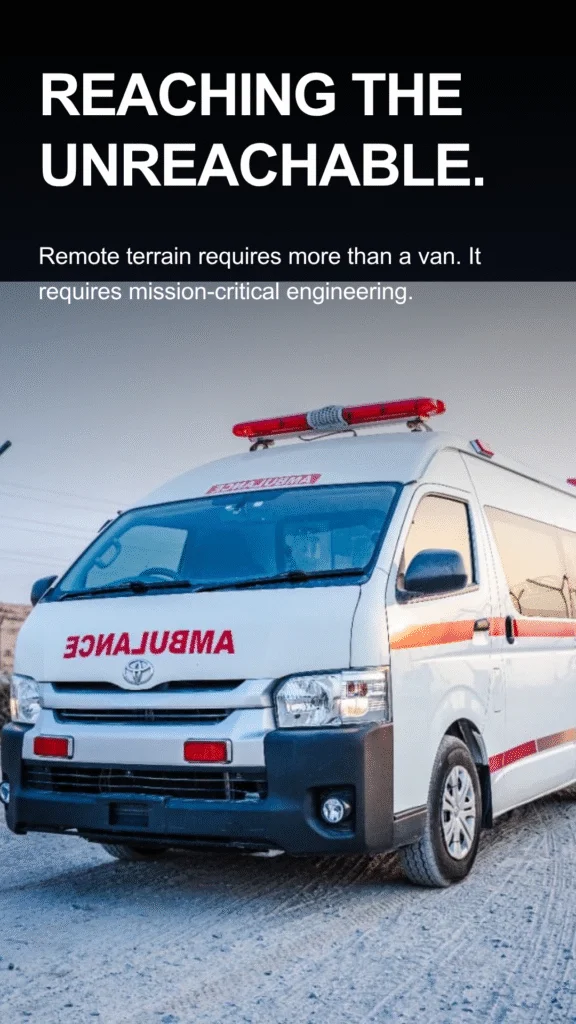
Urban emergency medical services face unique challenges every single day. For instance, city traffic is heavily congested. Furthermore, narrow streets make navigation incredibly difficult for emergency operators. Consequently, standard truck-based ambulances struggle to maneuver quickly through tight spaces. Therefore, you need a nimble, reliable, and highly efficient vehicle. Enter the Toyota Hiace. Without a doubt, it is the absolute standard for urban medical transit. Welcome to the definitive Hiace Ambulance Guide. In this guide, we will explore why this vehicle dominates city emergency response. Specifically, this text details its mechanical features and medical conversions. Additionally, we will cover essential international safety standards.
Why Choose the Toyota Hiace for Urban EMS?
The Toyota Hiace is a global icon in the commercial vehicle sector. Why is it perfect for medical conversions?
First, it offers unmatched urban maneuverability. Crucially, the compact wheelbase allows drivers to navigate tight corners easily. For example, it easily fits through narrow city alleys and congested hospital entrances.
Second, Toyota’s legendary reliability ensures maximum fleet uptime. As a result, this vehicle rarely breaks down when properly maintained. Third, spare parts are cheap and universally available. Consequently, you will never wait months for imported engine components.
Lastly, the interior space is highly optimized. Therefore, it provides enough room for medical staff to treat patients comfortably.
Moreover, the vehicle features a low step-in height. This design choice simplifies patient loading. However, it does not compromise the vehicle’s structural integrity. On the contrary, the high-tensile steel frame provides excellent collision safety. In addition, the wide visibility from the driver’s cabin enhances road safety. Drivers can spot pedestrians and hazards quickly in dense urban centers. Ultimately, these factors combine to create a highly safe vehicle platform.
Base Chassis and Engine Specifications
A reliable engine is the heart of any emergency vehicle. Therefore, the Toyota Hiace offers excellent powertrain options for city driving. Buyers usually choose between a petrol or diesel engine. For instance, the petrol engine is very smooth and quiet. Consequently, it is perfect for modern cities with strict emission zones. On the other hand, the turbo-diesel engine offers much higher low-end torque. This power delivery is ideal for cities with steep hills or heavy payloads.
Furthermore, you can select either manual or automatic transmissions. Automatic transmissions reduce driver fatigue in heavy stop-and-go traffic. Meanwhile, the standard suspension handles paved roads very well. However, high-quality conversions will upgrade the rear suspension system, adjusting to prevents vehicle sagging when heavy medical equipment is loaded inside.
Adhering to EN1789 and ISO 13485 Standards
Safety is an absolute priority in medical transit. Thus, the best conversions comply with strict international safety standards. Specifically, the European EN1789 standard serves as the global safety benchmark. It regulates the exact design and testing of medical vehicles. Crucially, it mandates rigorous 10G crash testing for the patient cabin. As a result, every cabinet, stretcher, and monitor must remain securely anchored during severe impacts.
Furthermore, manufacturers must hold ISO 13485 certification. This international standard governs quality management systems for medical devices. Specifically, it ensures all installed life-support equipment functions flawlessly under stress. Therefore, you should never compromise on EN1789 and ISO 13485 compliance during procurement. Ultimately, these standards directly protect your medical crew and your patients.
Exterior Ambulance Features and Visibility
The exterior of a Hiace ambulance is designed for high visibility. For example, it must alert traffic quickly and safely. Therefore, high-intensity LED warning lightbars are mounted on the roof. In addition, bright strobe lights are integrated into the front grille. Consequently, a heavy-duty siren and public address system clear traffic effectively.
Moreover, the Hiace features a smooth, aerodynamic exterior profile. Unlike box-truck ambulances, it can easily enter low-clearance hospital parking garages. Crucially, the side sliding door offers rapid access for the medical team. Meanwhile, the wide rear tailgate allows easy stretcher loading and unloading. Alternatively, some models feature custom fiberglass high roofs. This modification gives paramedics more headroom to stand upright safely.
Interior Medical Compartment Design
The patient cabin must be clean, safe, and organized. For this reason, infection control is critical in any urban ambulance. For example, the interior walls use smooth, non-porous fiberglass or ABS plastic. Consequently, these materials are incredibly easy to wash and disinfect.
Furthermore, high-density polyurethane foam insulates the walls and roof. This insulation protects patients from extreme outside temperatures and street noise. Additionally, the floor uses heavy-duty, anti-slip, marine-grade vinyl material. It curves up the walls slightly to prevent fluid pooling. Meanwhile, medical cabinets are made from fireproof, PVC-coated foamboard. Therefore, they will not warp, splinter, or harbor dangerous bacteria. Crucially, all cabinets use EN1789-compliant slam-locks. These heavy-duty locks prevent doors from flying open during sudden stops.

Medical Equipment Integration
The Toyota Hiace can be configured for BLS or ALS missions. For example, Basic Life Support (BLS) focuses on rapid transit and stabilization. Conversely, Advanced Life Support (ALS) transforms the van into a mobile ICU. Specifically, the rear features an auto-loading, crash-tested main stretcher. It locks securely into an EN1789-compliant floor tracking mount.
Meanwhile, a padded squad bench sits opposite the main stretcher platform. This bench accommodates a second patient or multiple medical attendants. Additionally, dual oxygen cylinders are secured in a reinforced, crash-tested compartment. The oxygen is piped directly to wall-mounted flow meters. Furthermore, heavy-duty brackets hold vital emergency medical equipment. This equipment includes automated external defibrillators and portable suction units. Moreover, ALS models secure transport ventilators and multi-parameter cardiac monitors. Crucially, medical devices onboard must strictly adhere to ISO 13485 standards.
Advanced Electrical and Power Systems
A fully equipped ambulance demands significant electrical power. However, the factory battery cannot support heavy medical equipment alone. Therefore, custom Hiace ambulances use an advanced dual-battery management system. The primary battery is dedicated solely to starting the engine. In contrast, a secondary deep-cycle battery powers the entire medical cabin.
Consequently, an intelligent isolator charges both batteries while the vehicle drives. It separates them when the engine is turned off. Thus, this setup prevents the starter battery from draining at an emergency scene. Furthermore, the cabin requires a pure sine wave power inverter. This inverter changes 12V DC power into stable AC power. As a result, paramedics can run sensitive hospital-grade medical machinery safely. Finally, an external shore power socket is installed. This plug allows grid charging while parked at the hospital base.
Climate Control and HVAC Integration
Patient comfort directly impacts clinical outcomes during transit. For instance, extreme urban heat or cold can worsen a patient’s condition. Therefore, the Hiace medical cabin features a dedicated climate control system. It operates completely independently of the driver’s cabin AC unit.
Specifically, a high-output evaporator provides rapid cooling in hot environments. Alternatively, integrated heating units keep patients warm during winter months. Furthermore, heavy-duty roof extractor fans remove airborne pathogens and bad odors. The HVAC system is managed via a centralized digital touch panel. Consequently, this allows the medical crew to adjust temperatures instantly. Crucially, proper climate control also protects sensitive medical drugs from spoiling rapidly.
Detailed Cost Analysis of Hiace Ambulances
Budget optimization is crucial for any medical fleet manager. Fortunately, the Toyota Hiace offers an incredibly competitive total cost of ownership. For example, the initial purchase price is significantly lower than heavy truck ambulances. Therefore, this allows health ministries to purchase more vehicles for their budget.
In addition, fuel efficiency is another major financial advantage. The lightweight chassis consumes much less fuel during idle and transit. Consequently, maintenance costs are notably low across the globe. Toyota spare parts are mass-produced and highly affordable. For this reason, you do not need specialized mechanics to perform basic engine services. Routine oil changes and brake replacements are fast and cheap. Moreover, insurance premiums are generally lower for van-based ambulances. Ultimately, these factors make the Hiace highly attractive for private EMS companies. It delivers an excellent return on investment over a ten-year lifespan.
Daily Maintenance Protocols for Hiace Fleets
A reliable vehicle requires strict daily maintenance routines. Therefore, fleet managers must enforce rigorous mechanical and clinical checks. Every morning, for example, drivers should check engine oil and coolant levels. Tire pressure must be verified to ensure safe high-speed handling.
Crucially, the secondary deep-cycle battery must show a full charge. Meanwhile, the medical crew has their own daily checklist to complete. Specifically, they must test the pure sine wave power inverter. They must also ensure the oxygen cylinders are fully pressurized. Furthermore, the EN1789-compliant slam-locks must be tested for secure closure. All ISO 13485 certified medical devices must be powered on. For instance, the automated external defibrillator requires a daily self-diagnostic test. Subsequently, the portable suction unit must be checked for proper vacuum pressure. Without a doubt, strict adherence to these protocols guarantees absolute mission readiness.
Why Hiace Beats Heavier Truck Ambulances in Cities
Many EMS agencies initially consider buying heavy truck-based ambulances. However, these are often a poor choice for dense cities. For example, heavy trucks have massive turning radiuses. They cannot easily navigate crowded intersections or narrow residential streets. Furthermore, truck ambulances are much heavier and consume excessive fuel. They accelerate slowly, which delays critical response times in traffic.
Conversely, the Toyota Hiace is a Type II van ambulance. It accelerates quickly and weaves through traffic effortlessly. In addition, its compact height allows it to enter underground parking garages. Many high-rise apartment buildings have low parking clearances. Consequently, a heavy truck ambulance must park on the street. The Hiace can drive directly to the lobby doors. Therefore, it saves crucial minutes when transporting a critical patient.
Customization Options for Specific Medical Missions
The Toyota Hiace is not a one-size-fits-all medical vehicle. On the contrary, expert manufacturers can customize the cabin for specific operational missions. For instance, some regions require dedicated neonatal transport ambulances. These Hiace builds feature secure mounts for infant incubators. Additionally, they include specialized climate controls for newborn temperature regulation.
Alternatively, other regions require bariatric transport ambulances for obese patients. These builds feature reinforced chassis supports and extra-wide stretcher platforms. Consequently, they incorporate hydraulic lifting systems to prevent paramedic back injuries. Furthermore, some NGOs use the Hiace as a mobile primary care clinic. In this scenario, builds replace the stretcher with a medical examination chair. They also incorporate enhanced storage for vaccines and primary care medications. Ultimately, the versatility of the Hiace platform is truly remarkable.
The Role of Telemedicine in Modern Hiace Ambulances
Emergency medical transit is rapidly evolving with new technology. Therefore, modern Hiace ambulances are now integrating advanced telemedicine systems. These systems connect paramedics directly to hospital trauma surgeons. For example, high-definition cameras are mounted in the patient cabin. These cameras stream live video to the receiving emergency room. Paramedics wear communication headsets to speak with doctors hands-free.
Meanwhile, the ISO 13485 certified cardiac monitors transmit real-time patient data. As a result, doctors can see the patient’s ECG rhythm before they arrive. This allows the hospital to prepare the operating room immediately. Consequently, it drastically reduces the door-to-needle time for stroke patients. Telemedicine requires a robust cellular router. Crucially, this router is powered by the ambulance’s secondary battery network. This technological leap transforms the Hiace into a highly advanced clinic.
Who Uses the Toyota Hiace Ambulance?
The Toyota Hiace is trusted by countless organizations worldwide. Specifically, it is the premier choice for precise medical deployment scenarios.
- City Hospitals: For instance, it is ideal for moving patients between urban medical facilities.
- Private EMS Companies: Furthermore, it is highly cost-effective to operate and maintain daily.
- Government Health Ministries: Consequently, it is used for primary 911 emergency response in congested cities.
- Airport and Seaport Rescue: Moreover, it easily navigates tight tarmac spaces and cargo zones.
- Corporate Campuses: Therefore, it provides rapid response for large industrial or office parks.
Ambulance Procurement Checklist
Buying a medical fleet requires careful evaluation and planning. Therefore, use this checklist when reading any Hiace Ambulance Guide.
- Fuel Quality: First, ensure the base vehicle matches your local fuel quality.
- Suspension Upgrade: Second, verify the suspension is upgraded for heavy medical payloads.
- Materials Check: Third, reject any build using standard wood for medical cabinetry.
- Power System: Fourth, confirm the inclusion of a high-capacity pure sine wave inverter.
- Safety Mandates: Fifth, ensure the vehicle conversion meets strict EN1789 crash-test standards.
- Device Certification: Sixth, verify that the onboard medical devices hold ISO 13485 certifications.
- Support Services: Finally, ask the manufacturer about their after-sales support, warranty, and spare parts availability.
Conclusion
Urban emergency medical services require speed, reliability, and efficiency. Fortunately, the Toyota Hiace delivers on all these fronts perfectly. It provides an indestructible mechanical foundation for city driving. Expert conversions turn it into a highly capable mobile clinic. This Hiace Ambulance Guide outlines the key mechanical and clinical parameters. Procurement officers can make informed decisions to maximize fleet uptime. Do not trust critical city missions to unproven or bulky vehicles. Rescue Ride Africa specializes in these custom medical conversions. We build vehicles that comply with the highest global safety standards.
Are you ready to optimize your urban emergency medical fleet? Do not compromise on response times or safety standards. Contact Rescue Ride Africa today to consult with our healthcare infrastructure architects and get a custom quote for a high-performance urban ambulance.